Railroads Live Under a Different Liability Regime
For most businesses, an employee injured on the job is covered by state workers' compensation — a no-fault system with scheduled benefits. Railroads are different. Injuries to railroad workers are governed by the Federal Employers Liability Act (FELA), a federal statute enacted in 1908 that replaces workers' compensation for employees engaged in railroad operations. Understanding FELA, and carrying coverage that responds to it, is one of the most important and most misunderstood parts of insuring a heritage steam railroad.
Steam Locomotive Insurance, a division of Contractors Choice Agency, specializes in this sector precisely because the liability picture for a steam operator is not something a generic business policy is built to handle. This article explains how FELA works, the broader railroad liability exposures a steam operator faces, and the specific lineside fire risk that comes with burning coal or oil to make steam.
What Makes FELA Different from Workers' Compensation
The crucial distinction is fault. Workers' compensation pays benefits regardless of who was at fault, but those benefits are capped by statute. FELA, by contrast, is a fault-based system: an injured railroad worker must show that the railroad's negligence played some part — even a small part — in causing the injury. When that burden is met, the worker can recover damages through a claim or lawsuit, and those damages are not limited to a workers' compensation schedule. They can include lost wages, medical costs, pain and suffering, and more.
This produces a few practical realities for a steam operator:
- Exposure can be larger. Because FELA damages are not capped the way comp benefits are, a single serious injury claim can be significant.
- Claims are litigated. FELA matters are resolved through negligence claims and lawsuits rather than an administrative benefits process, so defense costs matter.
- It requires specific coverage. A standard workers' compensation policy is not designed to respond to a FELA action. Coverage written to address FELA exposure is what protects the railroad.
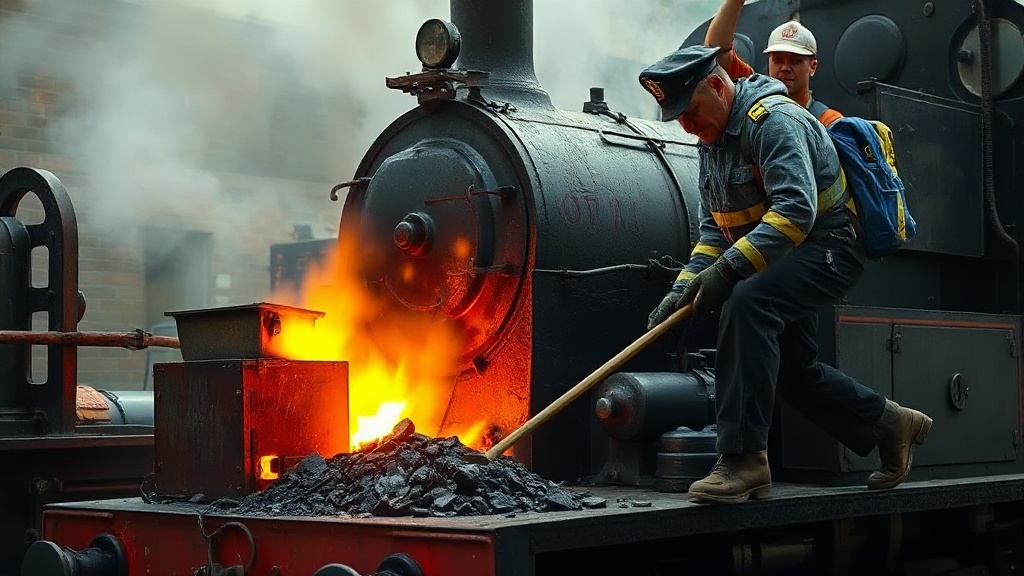
For a steam railroad, the people most exposed are the very people who make the operation possible — the footplate crew working around a hot, high-pressure locomotive, the shop staff handling heavy components, and the train and track crews working around moving equipment.
Who Is Covered by FELA Versus Comp
One of the first conversations to have with your agent is mapping your workforce. Heritage operations often blend roles: railroad operating employees, shop and restoration workers, and non-railroad staff such as gift shop and office personnel. Generally, employees engaged in railroad operations fall under FELA, while non-railroad staff are handled under workers' compensation. Heritage railroads are also heavily volunteer-driven, and how volunteers are classified for injury coverage is a question that must be answered deliberately rather than assumed. Getting this mapping right is essential so that no group of your people ends up uncovered.
Operating Liability: Crossings, Collisions, and Third Parties
Beyond worker injury, railroad liability coverage responds to the operating risks of actually running trains. These include:
- Grade-crossing incidents, where trains and highway traffic meet — historically one of the most serious railroad exposures.
- Collisions and derailments, which can damage equipment, injure people, and harm the property of others.
- Damage to host railroad or municipal property along the line over which you operate.
If you run over track owned by a host railroad, a short line, or a municipality, your operating agreement will almost certainly require railroad liability coverage at specified limits, with the host named as an additional insured. Issuing those certificates correctly and on time is part of keeping your operation legal and your hosts satisfied.
The Steam-Specific Hazard: Lineside Fire
Here is an exposure that a diesel operator never has to think about. A steam locomotive makes its power by burning coal or oil, and combustion produces sparks, hot cinders, and embers that can leave the stack and the firebox. On a dry day, those embers can ignite grass, brush, and trees along the right-of-way. Lineside fire is a genuine and historically well-documented risk of steam operation, and a wind-driven fire that spreads onto adjacent property can produce large third-party liability claims.
Managing this exposure is part operations and part insurance. Spark arrestors, fire patrols following the train during dry conditions, vegetation management along the right-of-way, and seasonal operating restrictions are all common risk-management practices. On the insurance side, your liability program needs to contemplate fire damage to the property of others. In drought-prone or wildfire-prone regions this exposure deserves particular attention, and your agent should help you align your coverage with your operating practices.
Ash, Hot Work, and Shop Exposures
The same combustion that powers the locomotive creates hazards on the ground. Hot ash and clinker dropped in the ash pit, hot work and welding in the restoration shop, and the storage of fuel and solvents all add to the fire and injury picture. These exposures connect the railroad liability conversation to your property and boiler coverages, which is why a steam operator is best served by an integrated program rather than a stack of disconnected policies.
Build the Program Around How You Actually Operate
FELA, operating liability, and lineside fire are not edge cases for a heritage steam railroad — they are core exposures that define the business. The right program is built around your specific operation: your line, your crew structure, your hosts, and your fire-season practices. Talk to Steam Locomotive Insurance to request a quote and to work through your liability exposures with an agent who understands what it takes to run live steam safely and responsibly.